
Before you get the keys, your landlord will probably check your credit, verify your income, call your past landlords, and maybe run a background check. You're about to hand them thousands of dollars and a year of your life. You can check them too.
Most of what you need is public and free, and it takes 15 to 30 minutes. No single record tells the whole story. A clean search doesn't prove a landlord is good, and one complaint doesn't prove they're bad. You're looking for patterns across several sources.
Here's how to do it, in the order that works best.
Rented from a landlord you'd warn people about, or recommend? Leave a review on RentWise. It takes about two minutes and helps the next renter decide.
In this guide
- Step 1: Find out who owns the rental
- Step 2: Look up the landlord's business
- Step 3: Check the rental license
- Step 4: Look at inspection and violation history
- Step 5: Search court records
- Step 6: Read what previous renters say
- Step 7: Search the property address
- Step 8: Ask someone who lives there
- Step 9: Treat the showing like an interview
- Step 10: Make sure the lease matches what you were told
- The 15-minute landlord check
- Red flags worth a closer look
- Green flags
- Frequently asked questions
Step 1: Find out who owns the rental
The person showing you the apartment may not own it. Behind one unit there can be an owner (often an LLC), a management company, and a leasing agent. You want all three names.
Start with the county property records. Search [county name] property search or [county name] property tax records, then look up the street address. The record lists the owner and the mailing address where the tax bill goes. Write down:
- The owner's name (a person, LLC, or corporation)
- The owner's mailing address
- The parcel number
- The date of the last sale
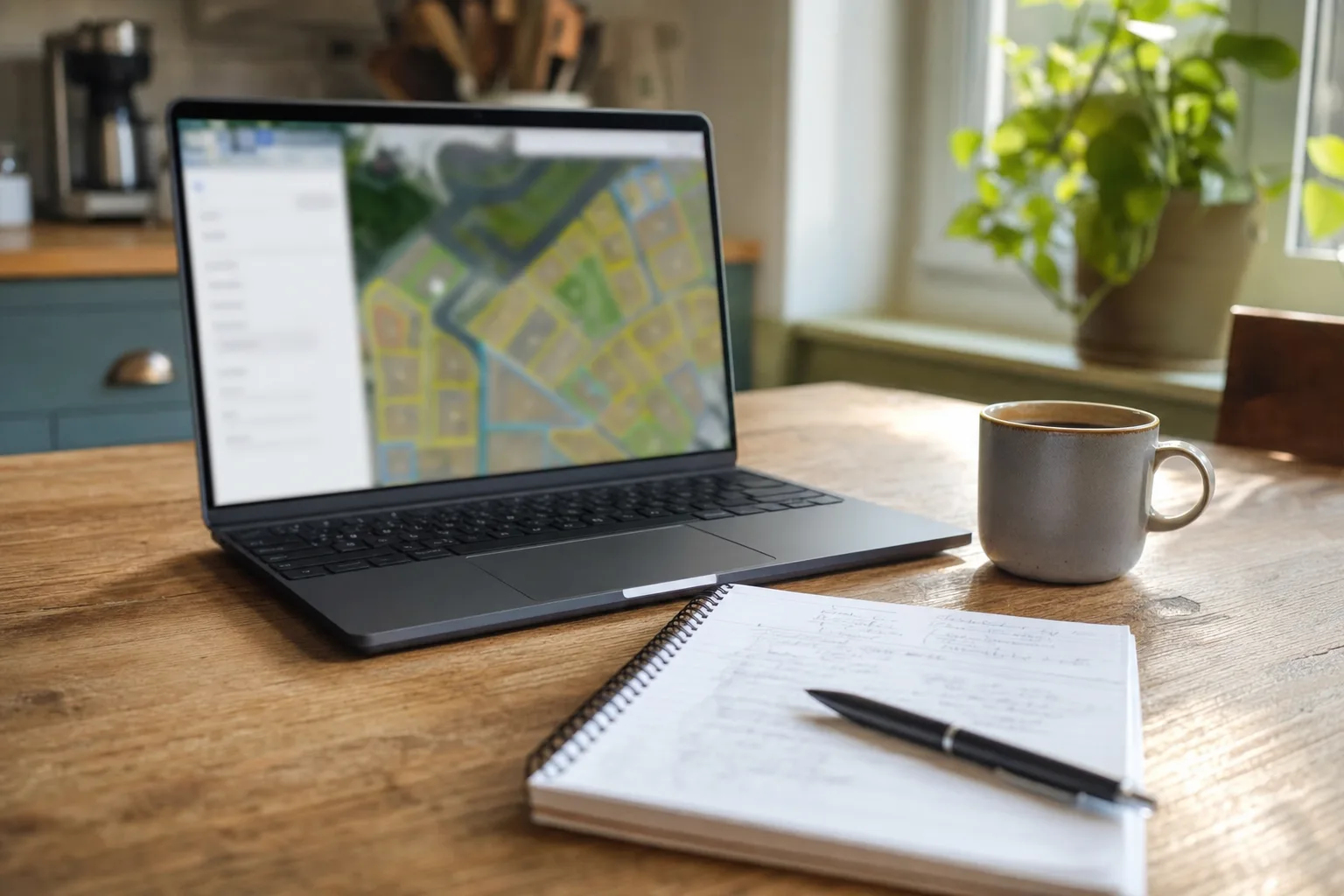
If the listing says one name and the county says another, that's normal when a management company is involved. If no one can explain the connection, keep asking. The FTC's guide to rental listing scams recommends this same check against the county tax assessor, because scammers often post homes they don't own.
Our guide to finding out who owns a rental property walks through this step in detail, including how to trace an LLC.
Step 2: Look up the landlord's business
If the county says the owner is "Example Apartments LLC," look up that LLC in the state business registry, usually run by the Secretary of State. The National Association of Secretaries of State keeps a directory of every state's business search.
Depending on the state, you may see the LLC's status (active or dissolved), its registered agent, its office address, filing history, and sometimes the names of its managers or members. Some states don't make LLCs list their owners, so the filing may show only a registered agent.
The registered agent isn't necessarily the person who owns or manages your apartment. It's the party that accepts legal papers for the company, and it's often a law firm or a paid agent service.
Then search the names in quotes:
"Example Apartments LLC""Example Apartments LLC" [city]"Example Apartments LLC" reviews"[property management company]" reviews
Step 3: Check the rental license
Many cities require landlords to register or license rental units, and some publish the records. Rules vary a lot by city, and plenty of places have no rental license at all. Where records exist, you may see whether the license is current, who holds it, who manages the property, its inspection history, and any license actions.
A few examples:
- Minneapolis publishes active rental licenses, searchable by address or owner and updated weekly. RentWise's free Minneapolis rental license lookup searches the same open data by address or company.
- Philadelphia's Atlas shows licenses, violations, and deeds by address. Philadelphia landlords must also give new tenants a Certificate of Rental Suitability.
- Seattle requires rental owners to register, and its rentals map shows registrations, inspections, and violations.
- Denver lets you check whether an address has a license.
For other cities, search [city] rental license lookup.
Red flag: Your city requires a rental license, and the landlord can't explain why the property doesn't have one. Get an answer before you pay a deposit or sign anything.
Step 4: Look at inspection and violation history
Housing-code records can show problems that never make it into a listing: heat, plumbing, electrical, pests, water leaks, structural issues, fire safety. Where a city publishes these records, search by address.
- New York City: HPDONLINE shows complaints, violations, litigation, and registration.
- Chicago: the city's building violations data goes back to 2006.
- Boston: RentSmart Boston combines housing violations and 311 complaints.
- Minneapolis: the city's property information search includes inspection history.
Look for patterns, not single incidents. One old violation that was fixed quickly means little. The same problem showing up year after year means more. For each record, ask:
- How recent is it?
- How serious is it?
- Was it corrected, and how fast?
- Does the same problem keep coming back?
Read the records carefully. Chicago's own data notes that its records don't necessarily reflect a building's current condition, and that they include cases where the owner was found not liable.
Step 5: Search court records
Many state and county courts let you search case records online by party name. Search the owner, the LLC, and the management company. In Minnesota, use Minnesota Court Records Online. For other states, the U.S. Department of Justice keeps a list of state court websites.
You might find eviction filings, disputes with tenants, or other civil cases. A court case by itself doesn't tell you much. Landlords sue and get sued in the ordinary course of business. If you find records, read what happened, and look for the same kind of case recurring.
Also know that court searches miss a lot. Some states seal or restrict eviction records. New York's WebCivil Local search shows landlord-tenant cases only until 14 days after the last court appearance. A clean search isn't proof of a clean history.
Step 6: Read what previous renters say
Public records tell you things reviews can't. Reviews tell you things public records can't:
- Were repairs handled quickly?
- Did the landlord answer calls and messages?
- Did tenants get notice before someone entered their unit?
- Was the building kept up?
- How did move-out go, and were deposit deductions explained?
Search the landlord or property manager on RentWise to see what previous renters have shared. Then read the reviews themselves, because a star rating hides the details. Several renters describing the same experience tell you more than one angry or glowing review.
Step 7: Search the property address
Landlords change company names. Buildings change management. The address stays the same. Search:
"123 Main Street""123 Main Street" apartment"123 Main Street" landlord"123 Main Street" complaints"123 Main Street" [management company]
Old listings for the same unit can also show earlier rents, amenities, and management companies. If the same unit is listed under different names or at prices far apart, slow down. The FTC lists duplicate listings under different names as a common scam sign.
Step 8: Ask someone who lives there
Current tenants know things no database does. If you see someone outside or in a public lobby, ask politely. If they don't want to talk, thank them and move on. Don't follow anyone into locked or private areas. Good questions:
- How fast does management fix things?
- Does the landlord communicate well?
- Do you get notice before someone comes into your unit?
- Have you had problems with the building that keep coming back?
- Would you sign another lease here?
Pay the most attention to the last answer.
Step 9: Treat the showing like an interview
You're inspecting the landlord as well as the apartment. Look for:
- Strong odors
- Water stains, visible mold, or moisture
- Signs of pests
- Broken locks or doors
- Damaged hallways and common areas
- Repairs that look long overdue
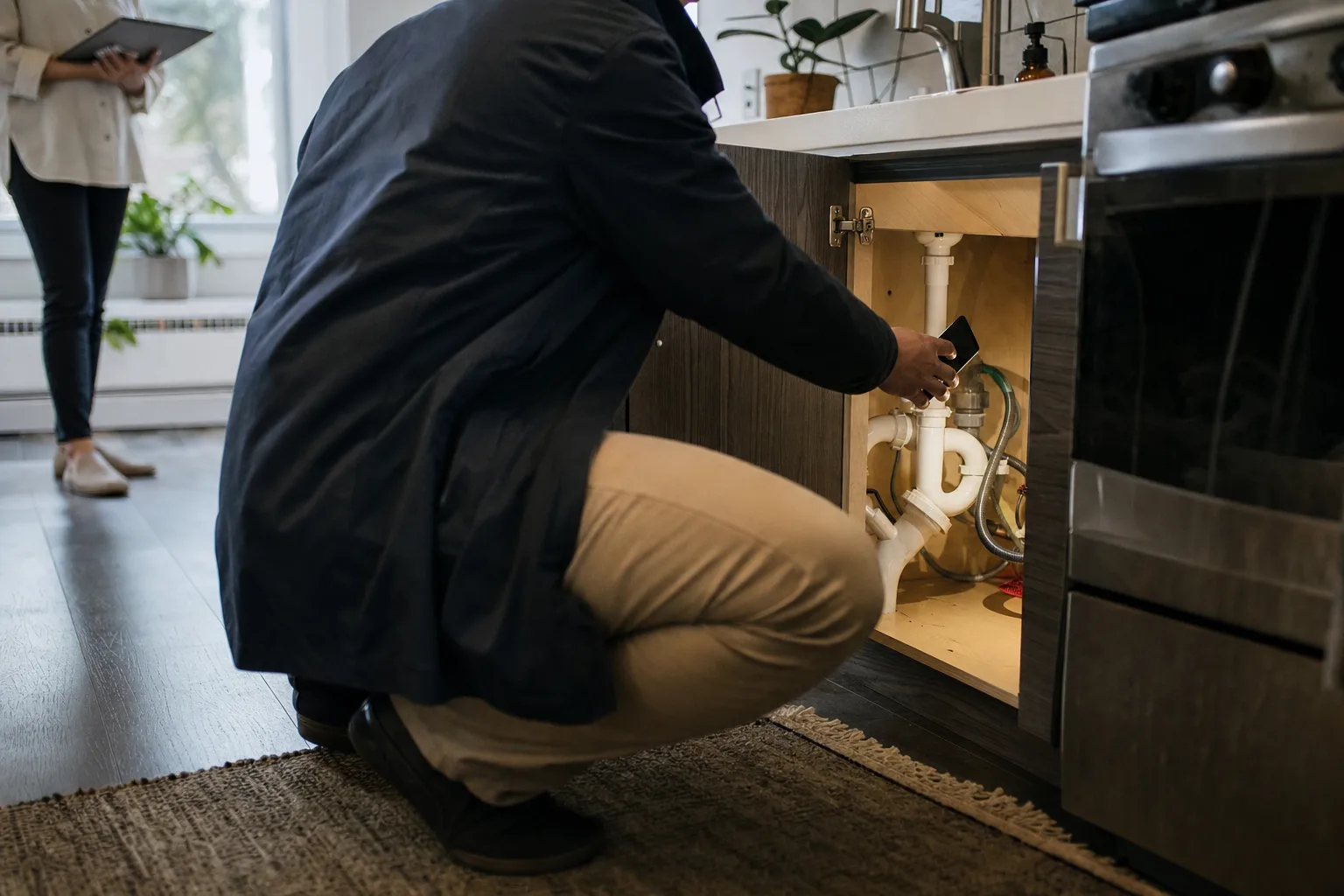
Then pay attention to how the landlord or agent acts. Do they answer questions directly? Will they put promises in writing? Are they pushing you to pay today?
Pressure is a warning sign. The FTC says that if anyone pressures you to decide quickly, you should walk away. It also says a demand for payment only by wire transfer, gift card, or cryptocurrency means it's a scam. Be wary of anyone who says they can't show you the unit in person.
Step 10: Make sure the lease matches what you were told
Read the whole lease before you pay anything. Check that it covers, and matches what you were told about:
- Monthly rent and due date
- Security deposit amount
- Which utilities you pay
- Late fees
- Pet rules and fees
- Parking
- Who handles which repairs
- When the landlord can enter
- Renewal terms and rent increases
- Notice required to move out
- Move-out requirements
If someone promises something important out loud, like a new appliance, a parking spot, or a repaired window, ask for it in the lease or in writing. A verbal promise is hard to prove later.
The 15-minute landlord check
Short on time? Run this before you sign:
- Minutes 1 to 3: Search the address in the county property records. Note the owner and mailing address.
- Minutes 4 and 5: If the owner is an LLC, look it up in the state business search.
- Minutes 6 and 7: Check the city's rental license records, if your city has them.
- Minutes 8 to 10: Check inspection and violation records.
- Minutes 11 and 12: Search court records for the owner, LLC, and manager.
- Minutes 13 and 14: Read renter reviews on RentWise.
- Minute 15: Google the property address in quotes.
Fifteen minutes now can save you a year of dealing with a landlord you'd never have picked.
Red flags worth a closer look
None of these proves a landlord is bad. Each is a reason to ask more questions before you sign:
- They won't tell you who owns the property.
- The city requires a rental license and the property doesn't have a current one.
- The property has repeated housing violations that went unresolved.
- They won't give you a written lease.
- They want payment by wire transfer, gift card, or cryptocurrency.
- They pressure you to send money right away.
- Promises they made aren't in the lease.
- They won't let you see the actual unit.
- The unit doesn't match the listing.
- Several reviews describe the same problem.
Green flags
Good landlords leave a trail too. Look for:
- A clear written lease with every fee spelled out
- Quick, direct answers to your questions
- A well-kept building and common areas
- A move-in inspection or condition checklist
- A clear way to request repairs
- Notice before entering units
- Detailed, positive reviews from past renters
If a landlord checks most of these boxes, say so in a review after you move in. Good landlords deserve to be found.
Check them the way they check you
Landlords screen renters before handing over the keys. You can do the same.
Property records, business filings, rental licenses, inspection records, court records, and renter reviews each show you something different. None of them is the whole picture. Together, they tell you a lot about who you're about to rent from.
Looking at a new apartment? Search the landlord or property manager on RentWise before you sign.
Already rented from them? Leave a review so the next renter knows what to expect.
Renting in the Twin Cities? See our local guides to checking a Minneapolis landlord and knowing your Saint Paul landlord.
Frequently asked questions
How can I check if a landlord is legit?
Confirm the person or company you're dealing with matches the owner in the county property records, or can show they manage the property for that owner. Meet in person, see the actual unit, and never pay by wire transfer, gift card, or cryptocurrency. Then check rental license records where your city has them, and read reviews from past renters.
How do I find reviews of a landlord?
Search the landlord's name, the management company, and the property address in quotes, with the word "reviews." You can also search RentWise, where renters review landlords and property managers. Look for the same issue described by several renters, not single reviews.
How do I find out who owns my apartment?
Search the address in your county's property tax records, usually through the county assessor's or auditor's website. If the owner is an LLC, look it up in your state's business registry.
Can I look up complaints against a landlord?
Often, yes. Many cities publish housing-code complaints and violations by address, and many courts let you search cases by party name. Your state attorney general's office may also take consumer complaints about landlords. Coverage varies by city and state.
How do I check a landlord's rental license?
Search [your city] rental license lookup. Cities that license rentals often publish a lookup or open dataset. If your city doesn't license rentals, there may be nothing to check, which is common.
Can I run a background check on my landlord?
You can search public records about your landlord yourself: property ownership, business filings, licenses, code violations, and court cases. That's what this guide covers. A credit report is different. Federal law lets a landlord pull one on you because you applied to rent from them. You generally don't have the same legal reason to pull one on them, so don't try. People-search sites often mix up people with similar names, so confirm anything you find in the official record.
Should I research the property management company too?
Yes. The management company handles repairs, rent, and move-out, so its track record may matter more day to day than the owner's. Search it the same way you'd search the owner.
RentWise isn't a law firm, and this guide is general information, not legal advice. Laws change and differ by state and city. We last checked the laws in this guide on October 1, 2026. For help with your situation, contact a local tenant organization or legal aid office.