
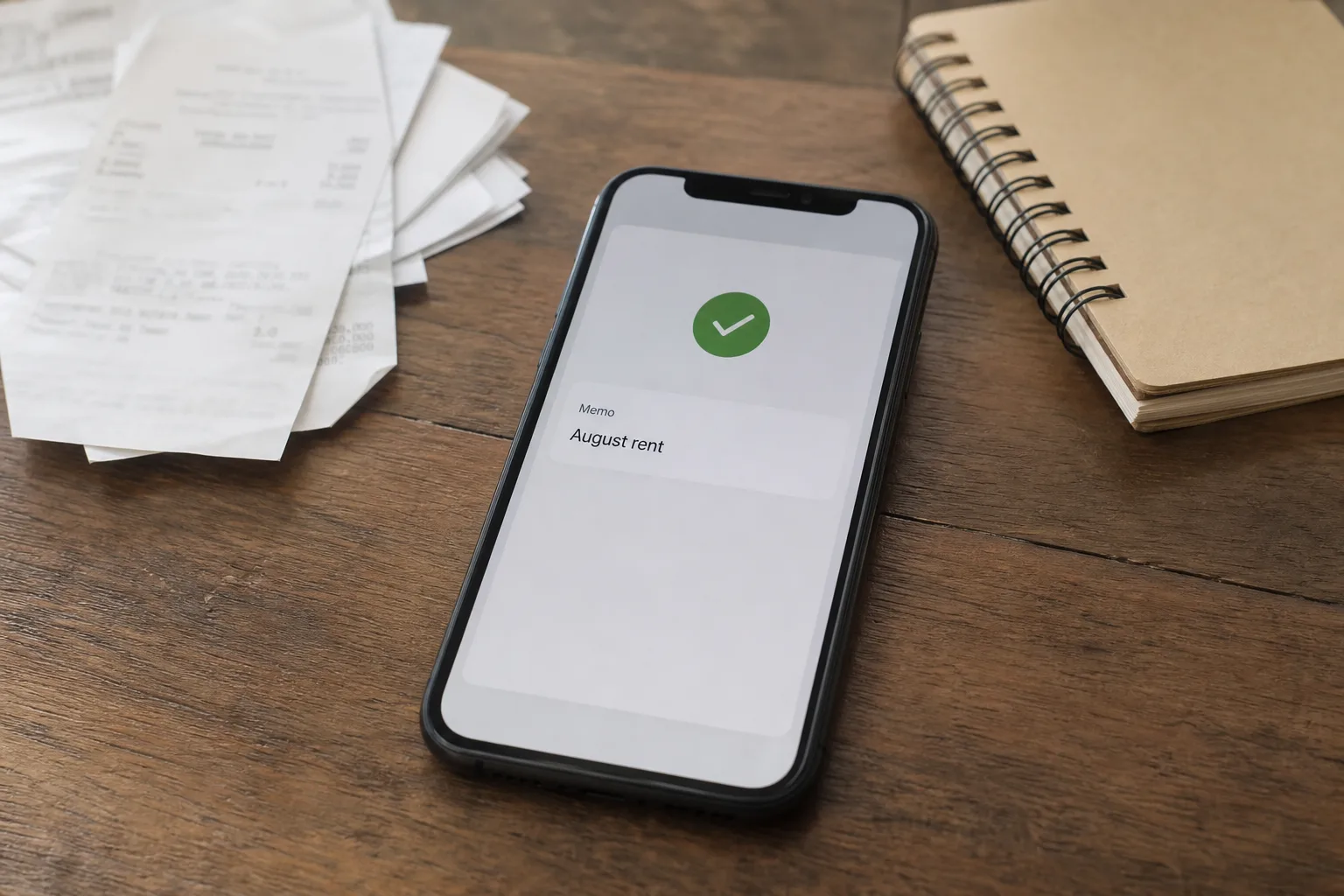
Every year, tenants get evicted for non-payment of rent they actually paid. Not because they lied. Because they couldn't prove it. The landlord's records say the money never showed up, the tenant handed over cash and got nothing in return, and a judge can only rule on what's in front of them.
Whether you're currently in a dispute or just want to make sure you never end up in one, this guide walks through what counts as proof of rent payment, how to get it going forward, and how to reconstruct evidence if a dispute already started.
Renting from a Minnesota landlord who is easy or difficult about payment records? Leave a review on RentWise. How a landlord handles receipts and payment records is exactly the kind of thing the next renter needs to know before signing.
In this guide
This is general information, not legal advice. Rent-payment records and eviction defenses are state-specific. Verify anything below against your state's landlord-tenant office before you act.
Why proof of payment matters
There are three main places a rent-payment dispute can land you, and all three depend on documentation.
- Eviction court for non-payment. If a landlord files eviction for unpaid rent, you have a defense if you can show the rent was actually paid. Without proof, the court has to rely on the landlord's records. That's a losing position.
- Security deposit disputes. Landlords sometimes claim owed back-rent as a deduction from the deposit at move-out. If you paid in full every month, you need records to prove it.
- Small-claims court. If a landlord retains rent you paid or double-charges you, small-claims court is where you recover it. Small claims runs on evidence.
In each of these, the tenant who has receipts, bank statements, and a written trail wins the conversations that the tenant without paperwork loses.
The best ways to pay rent for creating proof
Not all payment methods create equal evidence. Ranked from most to least defensible:
1. Bank transfer with a clear memo. Bank-to-bank transfers (ACH, Zelle, wire) show up on both parties' statements. Include a memo line: "August 2026 rent, unit 3B." Statements are strong court evidence.
2. Check. A check is a paper trail: the check itself, your bank statement showing it cleared, and often a scanned image of the check with the landlord's endorsement. Write "August 2026 rent" in the memo.
3. Venmo, PayPal, Cash App, or a rent-payment app. These create transaction records with amount, date, sender, receiver, and (if you fill it in) a memo. Screenshot every transaction and email the screenshots to yourself so they're timestamped outside the app.
4. Credit or debit card via a landlord-run payment portal. Portals often generate an automatic email receipt or PDF. Save it. If the portal doesn't, take a screenshot of the confirmation page before you close it.
5. Money order or cashier's check. Both create a receipt at purchase (keep it). Money orders can be traced through the issuer, which is useful if a landlord claims it never arrived.
6. Cash. The weakest option. Cash leaves no trail unless you get a signed receipt every time. Nobody's memory of a cash handoff wins in court against a landlord's ledger. If cash is the only option, treat every transaction as a paper-trail requirement (more on that below).
If you have a choice, pick anything above cash. If you're currently paying in cash, this is worth changing.
What a rent receipt should include
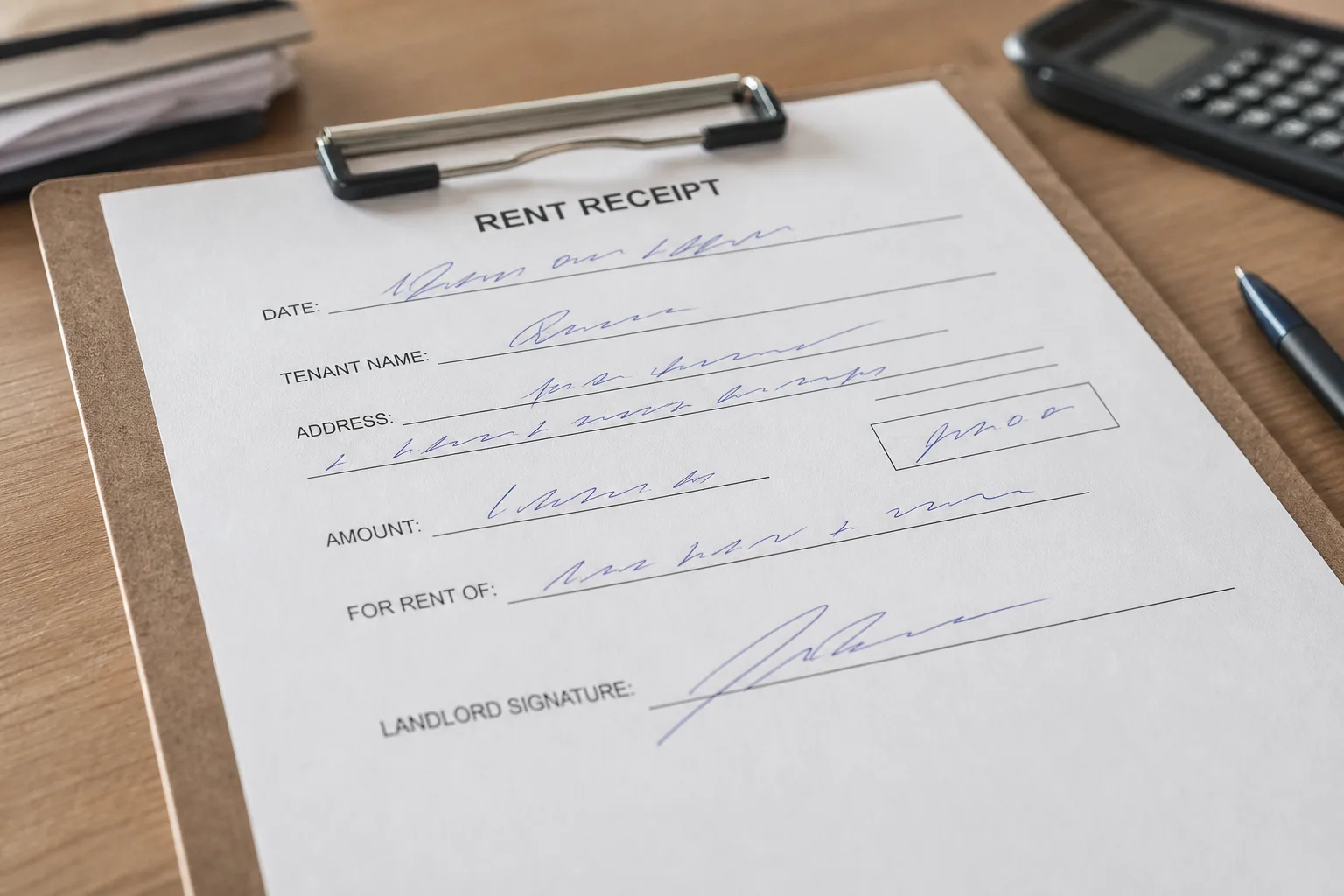
A useful rent receipt has all of the following. Missing any of them and the receipt can be challenged:
- The date of the payment
- The amount received
- The rental period the payment covers (for example, "August 2026 rent")
- The name of the tenant who paid
- The rental unit address (including unit number)
- The method of payment (cash, check number, money order number, transfer reference)
- The name and signature of the person who received the payment
An email that says "Received your $1,200, thanks" is a receipt too, as long as it's from the landlord's address and mentions the month. Keep it.
Your right to a receipt from the landlord
In many states, the landlord is legally required to provide a written receipt for rent payments in certain circumstances. The specifics vary:
- Maryland (Real Property §8-205) requires the landlord to give a receipt when you pay in cash or when you ask for one.
- Massachusetts (General Laws Chapter 186 §15B) requires the landlord to give a receipt for rent paid in advance for the last month and a signed receipt for the security deposit. That section does not require a receipt for ordinary monthly rent.
- Minnesota (Minn. Stat. §504B.118, subd. 2) requires a landlord who takes rent in cash to give a written receipt: at once if you pay in person, and within three business days if you do not.
- New York (Real Property Law §235-e) requires the landlord to give a written receipt for rent paid in cash or by any instrument other than a personal check. For a personal check, the tenant can ask for a receipt in writing.
Check your state's statute or landlord-tenant hotline for the specific rule where you rent. Even in states without a statutory requirement, most landlords will provide a receipt on request. Ask.
If your landlord refuses to provide a receipt for a payment you already made, put the request in writing (email is fine) and save both your request and their response.
Paying in cash: get a receipt every single time
Cash is the highest-risk method for rent payments because it leaves no institutional trail. If cash is your only option, protect yourself on every single payment:
- Never hand over cash without a receipt in exchange. Bring a pre-filled receipt with everything except the landlord's signature. Ask them to sign and date it before you hand over the money.
- Do the exchange in person, not through a slot or a mailbox. Cash dropped in an envelope with no witness is cash that "never arrived" in the landlord's records.
- Have a witness if you can, even briefly. A roommate walking through the room during the handoff can matter later.
- Photograph the receipt immediately and email it to yourself, so the timestamp is on record outside your phone.
- Log the payment in a spreadsheet or notes app the same day: date, amount, month, payer, method.
If a landlord insists on cash and refuses to provide a receipt, that can be a warning sign. It leaves you without proof if a dispute starts about what you paid.
A landlord who insists on cash and won't sign a receipt is a landlord the next renter wants to know about. Leave a review. This is exactly the kind of behavior that shapes whether someone signs.
Build a monthly payment log
Even with strong per-payment records, keep a running log that summarizes everything in one place. It saves hours if a dispute happens.
A simple spreadsheet with these columns is enough:
- Payment date
- Rental period covered (month and year)
- Amount paid
- Method (check number, transfer reference, cash receipt number)
- Confirmation reference (bank confirmation, screenshot filename, receipt scan)
- Notes (partial payment, late fee included, etc.)
Update it the same day you pay. At any point during the tenancy, you can pull up the entire payment history in one document.
Bonus: at the end of the lease, you have everything organized to respond to any move-out disputes about deposit deductions or "back rent."
If the dispute already started
If you're reading this because the landlord is already claiming you didn't pay, or an eviction filing has arrived, work backward and reconstruct the record.
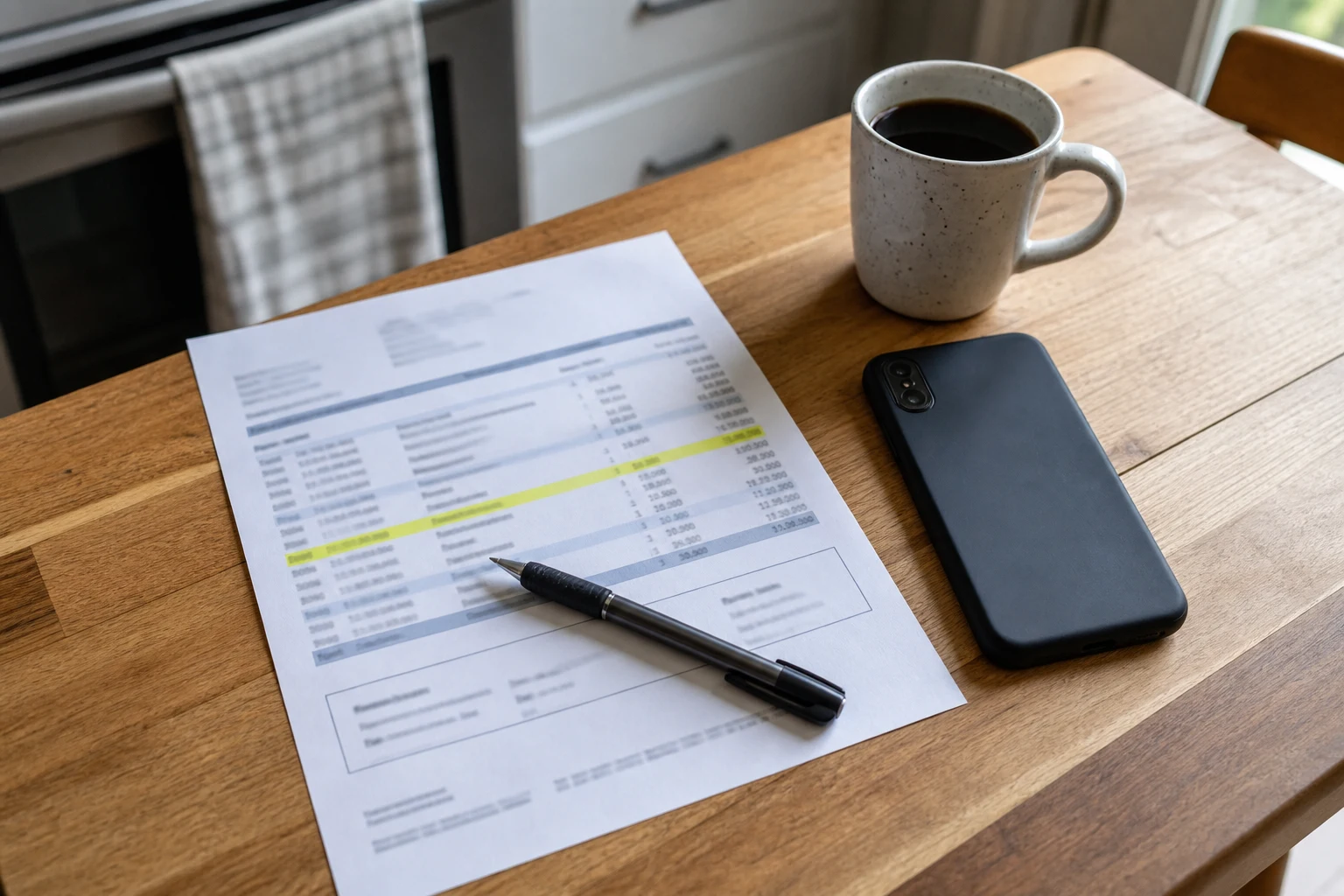
Pull bank statements for every month in question. Highlight the rent-sized outgoing transactions. Note the dates and amounts.
Check every payment app (Venmo, PayPal, Cash App, Zelle) for transactions to the landlord. Screenshot and export.
Search your email for the landlord's address plus words like "rent," "payment," "received," "check," "thanks." Any acknowledgment is evidence.
Check text messages for the same. A landlord saying "got it" after you paid is proof of receipt.
Ask your bank for images of cashed checks. Most banks provide them through online banking. The image shows the endorsement and the date the check cleared.
Get a witness statement if someone saw you make a cash payment or drop a check off. A written and signed statement from a roommate can matter.
Contact a tenant hotline if you're facing a filed eviction. In Minnesota, HOME Line (612-728-5767) walks tenants through this exact scenario. In other states, look up your state's legal-aid or tenant-hotline resources.
The window to reconstruct proof is short after a filing. Move fast.
Frequently asked questions
Is my landlord required to give me a rent receipt?
It depends on the state. Maryland, Massachusetts, Minnesota, New York and Washington (among others) have statutes requiring landlords to provide receipts under certain conditions, most often when you pay in cash. Check your state's specific rule.
Is a Venmo or Zelle transaction record enough proof of rent payment?
In most cases, yes. Both create a timestamped record of the amount, sender, and receiver. Adding a memo line ("August 2026 rent") strengthens it. Screenshot and back up the record outside the app.
My landlord only takes cash. What should I do?
Get a signed and dated receipt from the landlord every single time. If the landlord refuses to provide receipts, that's a serious concern about how they'll handle future disputes. Consider whether it's a landlord you want to keep renting from, and know that you have a much weaker position in any payment dispute.
Can I get evicted if I paid rent but can't prove it?
Potentially, yes. The court decides based on the evidence in front of it. If the landlord shows a payment ledger with a missing entry and you can't produce a canceled check, receipt, or bank transfer, the court is likely to side with the landlord's records. Documentation is your defense.
How long should I keep rent receipts?
Keep every rent payment record for at least the length of your tenancy plus one to two years after you move out. Deposit disputes and back-rent claims can surface after move-out, and small-claims statutes of limitations run one to six years depending on the state.
What if my landlord loses my rent payment?
Send the landlord a written notice with the proof of payment attached (bank statement, canceled check, transaction record). If they still claim non-payment and threaten eviction, contact a tenant hotline or legal-aid immediately. Do not stop paying rent while you sort it out. Unpaid rent creates a real basis for eviction; a payment dispute you can prove does not.
Should I send rent by certified mail?
Certified mail creates a paper trail for when the payment arrived, but the mail itself is only a payment vehicle. The stronger record is the payment instrument: the check that cleared, the transfer that posted, the money order that was cashed. Certified mail is a nice add-on, not a replacement for the receipt or bank record.
Sources used
Checked 2026-07-28. The Maryland, Massachusetts, Minnesota and New York statutes were checked again on 2026-11-20.
- Maryland Real Property §8-205 (receipts): https://mgaleg.maryland.gov/mgawebsite/Laws/StatuteText?article=grp§ion=8-205
- Minnesota Statutes §504B.118 (cash rent receipts): https://www.revisor.mn.gov/statutes/cite/504B.118
- Massachusetts General Laws Chapter 186 §15B (security deposits and receipts): https://malegislature.gov/Laws/GeneralLaws/PartII/TitleI/Chapter186/Section15B
- New York Real Property Law §235-e (duty to provide receipt): https://www.nysenate.gov/legislation/laws/RPP/235-E
- HOME Line (Minnesota tenant hotline): https://homelinemn.org/
- Nolo, rent-payment record-keeping overview: https://www.nolo.com/legal-encyclopedia/renters-rights