
There are few rental situations that feel more violating than coming home and realizing someone was inside your apartment when you did not approve it.
Maybe maintenance came in for a repair you never requested. Maybe they were supposed to enter Unit 3 and went into Unit 2. Maybe the landlord gave no notice, moved your stuff, and now a laptop, mirror, plant stand, door frame, or piece of furniture is broken.
In Minnesota, those are not just awkward misunderstandings. Renters have a statutory right to privacy under Minnesota Statutes §504B.211. Landlords, property managers, maintenance workers, and anyone acting under the landlord's direction have rules they have to follow before entering your unit.
This guide covers what the law says, what to document immediately, how to ask for reimbursement when something is broken, and when to escalate.
Did your landlord enter without notice? Leave a review on RentWise. How a landlord handles privacy, repairs, and mistakes is exactly what the next renter needs to know before signing.
In this guide
- The Minnesota entry rule, in plain English
- When a landlord can enter without your approval
- What to do in the first hour
- If they went into the wrong unit
- If something was broken or missing
- How to write the reimbursement request
- When to call the city, HOME Line, or the court
- Frequently asked questions
The Minnesota entry rule, in plain English
Minnesota Statutes §504B.211 says a landlord may enter a renter's unit only for a reasonable business purpose and only after making a good-faith effort to give the renter reasonable notice of at least 24 hours.
The notice has to do more than say "maintenance sometime tomorrow." It must include a specific time or an anticipated window of time. Unless you agree otherwise, the entry has to happen between 8:00 a.m. and 8:00 p.m.
The landlord cannot make you waive this right in the lease. A clause that says "management may enter at any time" does not erase Minnesota's notice rule.
Reasonable business purposes include things like:
- Performing maintenance work
- Showing the unit to prospective renters after notice has been given or the lease is ending
- Showing the unit to a buyer or insurance representative
- Allowing city, county, or state inspectors into the unit
- Checking on a suspected lease violation
- Checking on a disturbance, unauthorized occupant, or vacated unit
The important point: even if the reason is legitimate, the notice rule still applies unless there is an emergency or another statutory exception.
When a landlord can enter without your approval
There are real exceptions. Minnesota law lets a landlord enter without prior notice if the landlord reasonably suspects immediate entry is necessary:
- To prevent injury to people or property because of maintenance, building security, or law enforcement conditions
- To determine a tenant's safety
- To comply with local ordinances about unlawful activity in the unit
That covers situations like active flooding, smoke, a gas smell, a suspected medical emergency, or a lock/security issue that cannot wait.
It does not automatically cover ordinary repairs, routine filter changes, pest treatment, appliance checks, showings, or a contractor who is "already in the building."
If the landlord enters without notice while you are not home, Minnesota law says they must disclose the entry by leaving a written notice in a conspicuous place in the unit.
What to do in the first hour
Do not start with a long angry text. Start with evidence.
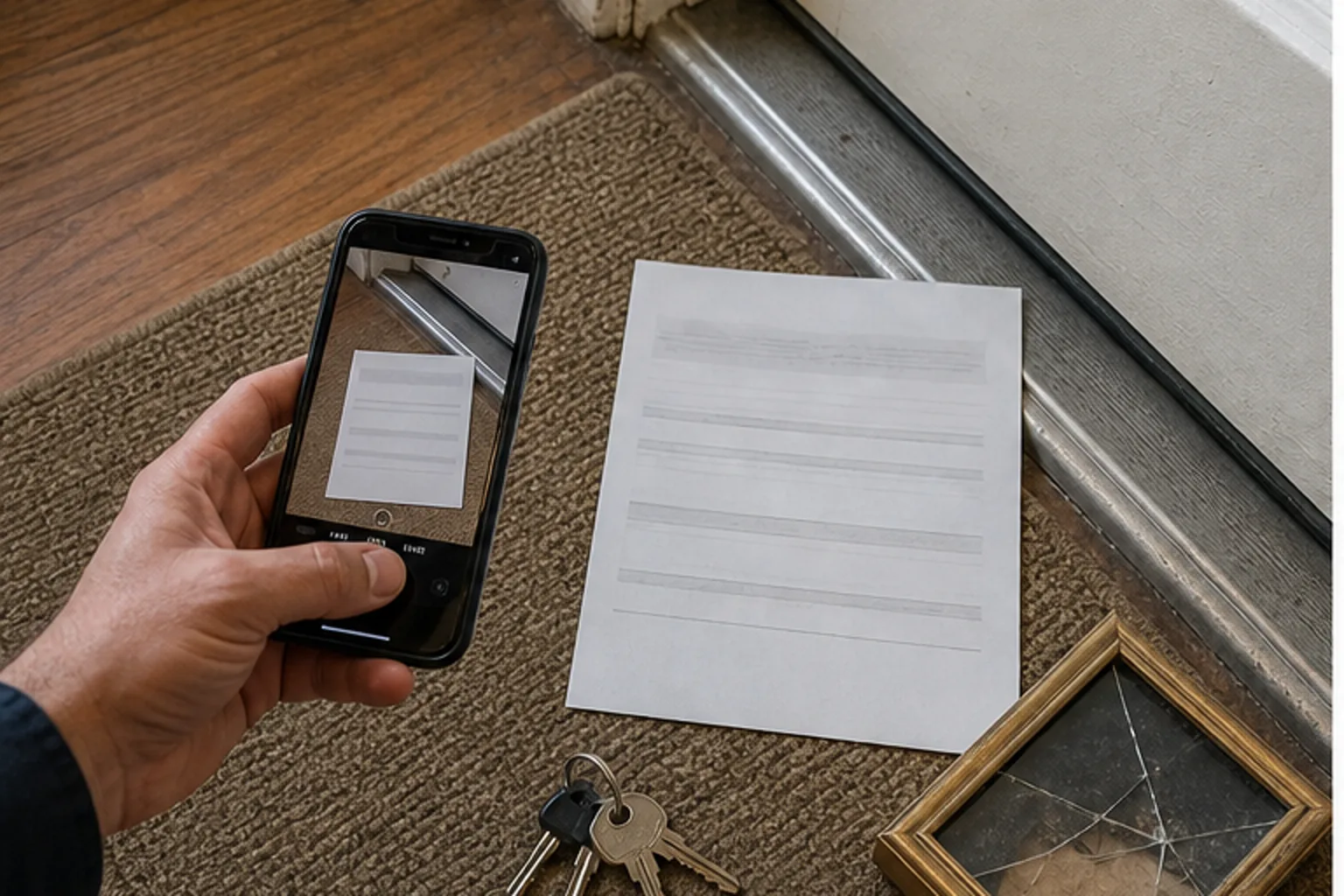
- Take photos before moving anything. Photograph the door, lock, notice, work area, broken item, floor, counters, and anything that looks disturbed.
- Take a quick video walkthrough. Narrate calmly: date, time, what you found, what was moved, what is broken, and whether any notice was left.
- Save the notice or work order. If there is a paper tag, door hanger, maintenance slip, or email, screenshot it and keep the original.
- Write down who entered. Landlord, property manager, maintenance worker, vendor, pest control, city inspector, unknown person.
- Ask neighbors if they saw anything. Keep it simple: "Did you see maintenance enter my unit today?" Screenshot any reply.
- Send one short written message. Ask for the entry record, the reason for entry, who entered, when they entered, and why notice was not provided.
Here is the tone you want:
Hi, I came home today and it appears someone entered my unit without the 24-hour notice required by Minnesota Statutes §504B.211. Please send me the entry record, the reason for entry, the name/company of everyone who entered, the time they entered, and a copy of any notice you believe was provided.
If something broke, add one sentence:
I also found damage to [item]. I am documenting it now and will send photos and a reimbursement request.
Short, factual, hard to argue with.
If they went into the wrong unit
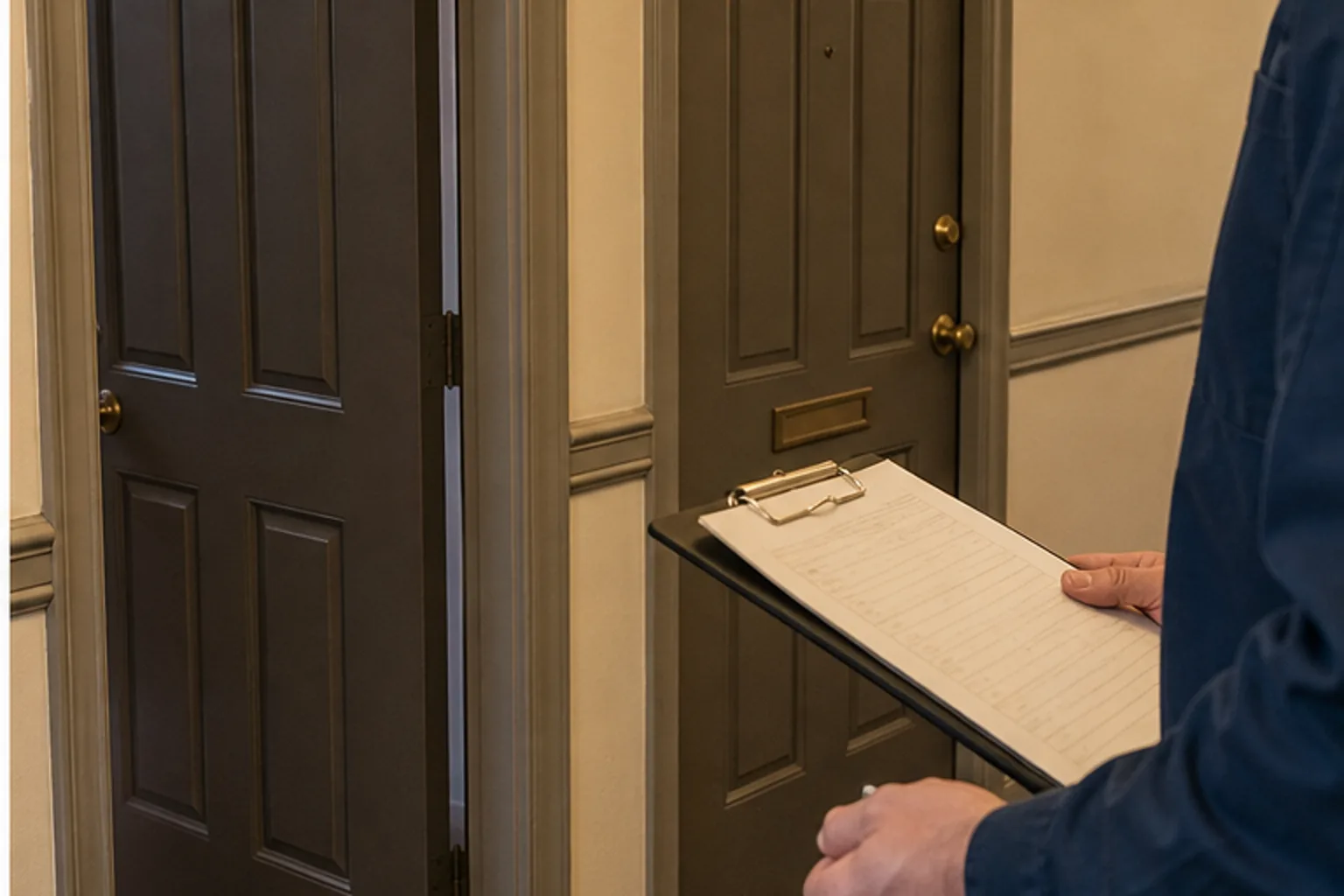
Wrong-unit entry happens more than landlords like to admit. A contractor has the wrong apartment number. Maintenance is sent to 312 instead of 321. A property manager keys into the right building and the wrong door.
For the renter, the response is the same but sharper:
- Ask for the work order showing the intended unit
- Ask who authorized entry into your unit
- Ask whether your unit key, code, or smart-lock access was used
- Ask whether any vendor had unsupervised access
- Ask what they changed so it does not happen again
If the repair was for another unit, that matters. "Performing maintenance work" can be a reasonable business purpose, but repairing someone else's unit is not a reasonable business purpose for entering yours unless there was an emergency connected to your unit or the building.
Use plain language:
It looks like maintenance entered the wrong unit. Please confirm the intended unit number, who entered my unit, how they accessed it, and what steps management is taking to prevent this from happening again.
If you have a keypad or smart lock, ask for the access log. If the building uses physical keys, ask who had the key and whether it was signed out.
If something was broken or missing
Treat broken property as a separate issue from the privacy violation.
The entry violation is about whether they had the right to enter and whether they gave proper notice. The broken-property issue is about who caused the damage and what it costs to fix or replace.
Document the broken item like you are building a small claims file:
- Photos from multiple angles
- A video showing how the item no longer works, if relevant
- The purchase receipt, bank charge, listing, manual, or comparable replacement price
- Repair estimate, if repair is possible
- Screenshots of the maintenance notice or entry message
- Names of anyone who entered
- A short timeline
Do not throw the item away until the dispute is resolved. If it is unsafe or taking up space, photograph it thoroughly first.
If something is missing, be careful with your wording. "My speaker is missing after entry" is stronger and cleaner than "maintenance stole my speaker" unless you have proof. If theft is possible, you can make a police report and give the report number to your landlord and renter's insurance company.
If the damage is small, the fastest path is usually a written reimbursement request. If the damage is expensive, involves missing property, or the landlord will not identify who entered, call HOME Line before you escalate. HOME Line is a free Minnesota tenant hotline that helps renters understand their options; the Twin Cities number is 612-728-5767 and the Greater Minnesota toll-free number is 866-866-3546.
How to write the reimbursement request
Keep it boring. Boring letters win.
Include:
- Your name, unit, and address
- Date and approximate time you discovered the entry
- The fact that you did not receive 24-hour notice, if true
- The item that was damaged
- Why you believe the damage happened during entry or repair
- The amount requested
- Photos, receipt, repair estimate, or replacement listing
- A deadline for response, usually 7 to 14 days
Example:
On July 12, I came home and found that maintenance had entered my unit without prior notice. No emergency was reported to me, and no written disclosure of entry was left in the unit. After the entry, I found my bathroom shelf broken on the floor near the repair area. Photos are attached.
The shelf cost $84.99 and is no longer usable. I am requesting reimbursement of $84.99 within 10 days. Please also send the entry record, the reason for entry, and the name/company of everyone who entered my unit.
If the landlord agrees, get the agreement in writing. If they offer a rent credit, ask them to confirm the amount and the month it applies to.
When to call the city, HOME Line, or the court
Not every unauthorized entry needs court. Start with the least dramatic tool that fits the facts.
Call HOME Line if:
- The landlord denies entering but you have evidence
- The landlord keeps entering without notice
- A vendor entered the wrong unit
- Something valuable broke or went missing
- You are worried about retaliation
- You are considering court or rent escrow
HOME Line offers a free tenant hotline for Minnesota renters at 612-728-5767, with toll-free help from Greater Minnesota at 866-866-3546. They also offer Spanish, Somali, and Hmong lines.
Call the city if the entry is tied to a repair or housing-code issue.
In Minneapolis, renters can contact Minneapolis 311 to report non-emergency city issues or ask about housing inspections. In Saint Paul, the Department of Safety and Inspections handles inspections and complaints, and its general information number is 651-266-8989.
City inspectors are most useful when the underlying issue is a housing condition: no heat, water intrusion, broken locks, pests, electrical hazards, sewage, mold, or unsafe work.
Consider court if the pattern continues or the landlord refuses to fix it.
Minnesota §504B.211 says a tenant may be entitled to remedies for an entry violation, including a rent reduction up to rescission of the lease, recovery of the damage deposit less lawful deductions, up to a $500 civil penalty for each violation, and reasonable attorney fees.
For some Chapter 504B violations, tenants may use rent escrow or tenant remedies procedures. That does not mean you should stop paying rent on your own. If rent escrow is appropriate, you pay rent into court, not into your pocket, and you follow the court process.
For broken personal property, conciliation court may be the practical route if the landlord or vendor will not reimburse you. Bring photos, receipts, repair estimates, the entry notice, your written messages, and any response from management.
What not to do
Some reactions feel satisfying but make the case worse.
- Do not stop paying rent without using a legal process. That can turn your privacy problem into a nonpayment eviction problem.
- Do not change the locks without legal advice or written permission. Your lease may restrict it, and the landlord may need lawful access in emergencies.
- Do not accuse a specific worker of theft without proof. Say what is missing and ask who entered.
- Do not rely on phone calls. Follow every call with a text or email summary.
- Do not let management keep it verbal. If they admit the mistake, ask them to confirm it in writing.
The winning pattern is boring: photos, timestamps, written notice, receipts, deadline, follow-up.
After it is resolved
If the landlord apologizes, reimburses you, and fixes the access process, that is useful information for the next renter.
If they deny, deflect, blame you, or keep entering without notice, that is even more useful.
The next renter deserves to know. Leave an honest landlord review on RentWise. Privacy, repairs, wrong-unit entry, and how management handles mistakes are exactly the details people look for before signing.
Frequently asked questions
Can a landlord enter my apartment without notice in Minnesota?
Usually no. A landlord generally needs a reasonable business purpose and a good-faith effort to give at least 24 hours notice. The notice must include a time or anticipated entry window, and entry is generally limited to 8:00 a.m. to 8:00 p.m. unless you agree otherwise. Emergencies are the main exception.
Do I have to approve the entry, or is notice enough?
Minnesota law focuses on reasonable business purpose plus notice. That means a landlord may be able to enter for a valid repair, inspection, or showing even if you are not excited about it, as long as they follow the notice rules. But "we entered whenever we wanted" is not how the statute works.
What if maintenance entered the wrong apartment?
Ask for the work order, intended unit number, entry record, names of everyone who entered, and how they accessed your unit. If the work was for another unit and there was no emergency involving yours, document it as both a wrong-unit entry and a no-notice entry.
What if they broke something during the repair?
Document the item, keep receipts or replacement prices, and send a written reimbursement request with photos and a deadline. If they refuse and the amount is worth pursuing, conciliation court may be an option.
Can I sue for unauthorized entry?
Minnesota §504B.211 allows remedies for violations, including up to a $500 civil penalty per violation and reasonable attorney fees. Talk to HOME Line or a tenant attorney before filing so you choose the right process.
Should I call the police?
For an ordinary notice violation, usually no. For missing property, suspected theft, threats, harassment, or a situation where you feel unsafe, a police report may be appropriate. Keep the report number.
Can I install a camera inside my unit?
Generally, renters can document what happens inside their own homes, but avoid recording private audio conversations without understanding Minnesota recording law. A simple indoor camera pointed at your entry area can help prove future entries.
Can I break my lease because my landlord entered without notice?
One violation does not automatically mean you can walk away from the lease. Repeated or serious violations may support stronger remedies, but get legal advice before moving out or stopping rent.
Sources used
- Minnesota Statutes §504B.211, Residential tenant's right to privacy
- Minnesota Statutes §504B.161, landlord covenant to keep premises fit and in reasonable repair
- Minnesota Statutes §504B.385, rent escrow action
- Minnesota Attorney General, Landlords and Tenants: Rights and Responsibilities, revised July 2025
- HOME Line tenant hotline
- Minneapolis 311 Service Center
- Saint Paul Department of Safety and Inspections