

The listing looks perfect. Two bedrooms, hardwood floors, in-unit laundry, and somehow $400 cheaper than everything else in the neighborhood. The landlord answers your message in minutes. He's friendly. He's also, conveniently, out of the country on mission work, so he can't show you the place. But if you send the deposit today, he'll mail you the keys.
There are no keys. There's no landlord. Often the apartment is real, which is the cruel part. Someone copied the photos from a legitimate listing, dropped the price, and is now collecting deposits from five people at once.
This is one of the most common frauds in the rental market. The FTC counted nearly 65,000 rental scam reports between 2020 and mid-2025, with about $65 million in reported losses, and the real number is higher because most people never report. Two findings from that data should make renters in a college town pay attention: about half of recent victims said the scam started with a fake ad on Facebook, and people aged 18 to 29 were three times more likely than other adults to lose money to one. Scammers specifically work the Facebook groups students use to hunt for sublets.
The good news: almost every rental scam uses the same handful of moves. Learn the 12 red flags below and you become a hard target.
Before you tour, before you apply, before you pay: look up the landlord on RentWise. If other renters have reviewed them, you'll know in 30 seconds whether you're dealing with a real person who returns deposits, or nobody has ever heard of them.
In this guide
The 12 red flags
No single flag proves a listing is fake. Two or three together mean walk away.
1. The rent is clearly below market
Scammers price low on purpose. A cheap listing gets more messages, and urgency does the rest. If a unit is $300 to $500 under every comparable listing on the same street, that gap is the bait. Real landlords occasionally underprice. They don't underprice and refuse a showing and need a wire transfer today.
2. You can't see the unit before paying
This is the single most reliable tell. Every excuse points the same direction: the owner is abroad, the current tenant won't allow showings, the property manager is sick, you can drive by but not go in. A legitimate landlord wants to meet you. Screening works both ways, and someone handing you keys to their property has every reason to look you in the eye first. No tour, no money. Ever.
3. The "landlord" is somewhere far away
Missionary work, military deployment, an oil rig, a sudden job transfer to London. The story varies but the function is identical: it explains why you can't meet, why the showing is impossible, and why everything has to happen by wire. Real owners who live out of state hire local property managers you can meet.
4. Everything is urgent
"Three other people are interested, I can hold it if you send the deposit tonight." Pressure is a tool. It exists to stop you from doing exactly what this article tells you to do, which takes about ten minutes. A real landlord with a good unit can afford to wait a day. A scammer whose listing might get flagged by tomorrow cannot.
5. They want untraceable payment
Wire transfer, gift cards, crypto, or a payment app like Zelle, Venmo, or Cash App. These are the scammer's favorites for one reason: once you hit send, the money is gone and nobody can claw it back. No legitimate landlord in 2026 collects a security deposit in Apple gift cards. Pay by check or any method with a paper trail, and treat a gift card request as a confession.
6. Money is due before you've signed anything
Deposit first, lease later. Application fee before you've seen an application. "Holding fee" to take the listing down. The sequence of a real rental is always: see the unit, submit an application, sign the lease, then pay the deposit and first month, and get a receipt. Any money requested before a signed lease should be small (a typical application fee) and paid through a traceable method to a verified person.
7. There's no screening at all
You offered to rent a stranger's property and they didn't ask for an application, a credit check, references, or proof of income. That's not luck. Landlords screen because a bad tenant costs them months of rent. Someone who doesn't care who you are doesn't plan to be your landlord.
8. The photos live in other listings too
Scrapers steal photos from real listings, old listings, and realtor sites. Right-click a photo and run a reverse image search (Google Lens works well). If the same kitchen shows up in a sale listing from another city, or in a listing at a different price with a different contact name, you've found a hijacked listing.
9. The contact doesn't match the property records
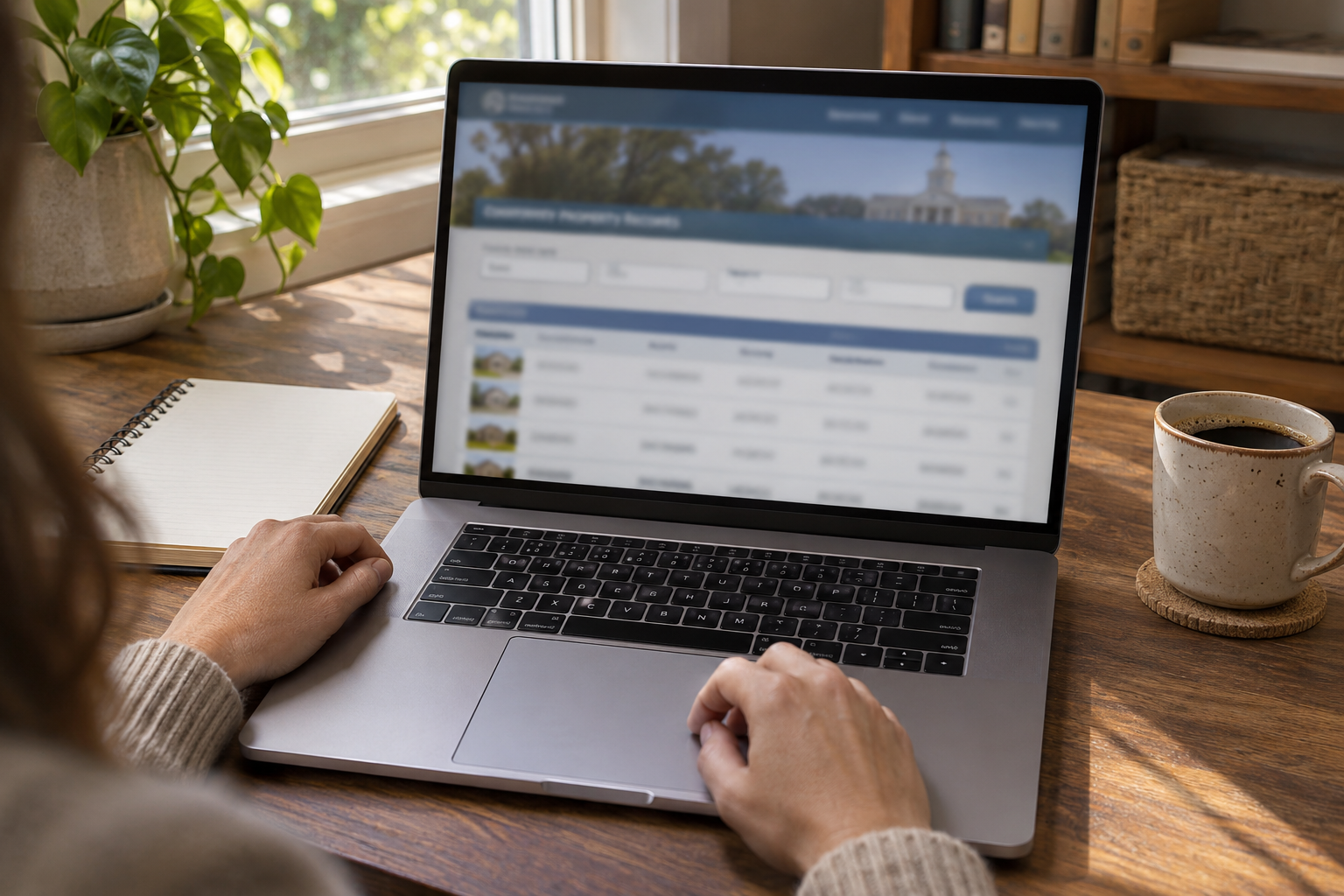
Every county publishes who owns every parcel. In Minneapolis that's the Hennepin County property search; in Saint Paul, Ramsey County. If the deed says "Oakline Properties LLC" and you're texting with "Pastor David" who has no connection to that name, stop. Our guide to finding out who owns a rental property walks through the lookup step by step. It takes five minutes and kills most scams instantly.
10. The listing text is copied from somewhere else
Paste a distinctive sentence from the listing into a search engine, in quotes. Scammers copy real listings word for word and just change the price and phone number. If the identical paragraph appears on another site with different contact info, the cheaper one is the fake.
11. The "background check" has a special link
A twist on the classic: before a tour, the "landlord" asks you to run a background or credit check through the specific site they link, usually $30 to $50. The property may not even exist. The scam is the fee, plus whatever personal data you typed in. If a screening is needed, it happens on a real application after you've seen the unit, not through a link a stranger texted you.
12. They rush you off the platform
Within a message or two, they want to move to WhatsApp, text, or personal email. Marketplaces and listing sites ban scam accounts and scan messages for fraud patterns, so scammers leave fast. Staying on-platform keeps a record and keeps their account reportable. Someone in a hurry to go somewhere unmonitored is telling you why.
How to verify a listing in 10 minutes
Run this checklist before any money moves, in this order, because the first items are free and fast:
- Reverse image search two or three of the listing photos.
- Search a quoted sentence of the listing text.
- Search the address plus the word "scam" and the address plus "for rent" to find duplicate listings at different prices.
- Look up the owner in county property records and compare names with your contact.
- Search the landlord on RentWise and read what past tenants say.
- Insist on an in-person tour, inside the unit.
- Ask for ID or proof of ownership or management at the tour. Real landlords aren't offended; they do the same to you.
- Sign a written lease before any deposit, and read our guide to checking out a landlord before signing.
- Pay first money by a traceable method, never wire, gift card, or crypto.
- Get a signed receipt with the landlord's name, the amount, and the unit address.
A scammer survives none of these steps. A legitimate landlord survives all of them without friction.
What to do if you already paid
Speed matters more than embarrassment. Scam recovery gets dramatically harder after 48 hours.
Call your bank or card issuer first and ask to reverse or dispute the payment. Wire transfers can sometimes be recalled if the receiving bank hasn't released the funds. For Zelle, Venmo, or Cash App, report the transaction as fraud in the app and to your bank, since some banks now reimburse payment-app scams.
Then report it. File at reportfraud.ftc.gov and at the FBI's Internet Crime Complaint Center (ic3.gov). Report the listing and the account to the platform where you found it. File a report with local police, because you'll want the report number for your bank dispute. If you gave the scammer your Social Security number or ID photos for a fake application, freeze your credit with all three bureaus the same day.
One more thing, and it matters more than it feels like it does: tell people. Post in the group where you found the listing. Warn the next renter. Scams keep working because every victim assumes they were the only one.
Found a real landlord? Help the next renter tell the difference. Leave a review on RentWise, good or bad. Scams thrive where renters have no information. Every honest review shrinks that territory.
Frequently asked questions
How common are rental scams?
The FTC received nearly 65,000 rental scam reports from 2020 through mid-2025, totaling about $65 million in reported losses. Actual losses are higher, since most fraud goes unreported.
Where do most rental scams start?
Fake social media ads lead. In FTC data for the 12 months ending June 2025, about half of victims said the scam began with a fraudulent ad on Facebook. College sublet groups are a favorite hunting ground.
Who gets targeted most?
Young renters. People aged 18 to 29 were three times more likely than other adults to report losing money to a rental scam, according to the FTC. Students moving on short timelines, hunting in Facebook groups, and renting sight unseen are the exact profile scammers want.
Can the apartment in a scam listing be real?
Yes, and it usually is. Scammers copy photos and text from legitimate listings and swap in their own contact info and a lower price. The real unit may even be available, through someone else entirely.
Is it ever safe to rent sight unseen?
Sometimes it's unavoidable for a long-distance move, but it raises your risk sharply. If you must, verify ownership through county records, do a live video tour where the person walks the unit on camera and responds to your requests in real time, sign a lease before paying, and pay traceably. A prerecorded video proves nothing.
What payment methods are safe for a deposit?
Personal check, cashier's check handed over in person, or a credit card or ACH payment through a property management portal. Anything reversible or traceable. Wire transfers, gift cards, crypto, and payment apps like Zelle offer no protection once sent.
Are "no credit check" listings always scams?
No, but they cluster with scams. A landlord who asks for nothing should make you ask why. Verify ownership and see the unit before any money moves.
The cheapest scam protection is information. Before you sign anywhere, look up the landlord on RentWise. And after you rent, leave a review so the next person starts with more than a listing photo and a stranger's word.